01Agent system of record
Supported agents, owners, identities, permissions, tools, workflows, and data touchpoints belong in one governed inventory.
Lucnox Orbit · Control Layer for Enterprise AI Agents
Give enterprise AI agents a chain of command.
Map supported agents, identities, owners, permissions, and data reach across Microsoft-first environments, then turn governance gaps into reviewable evidence.
Orbit helps you answer:
Orbit Product Surface
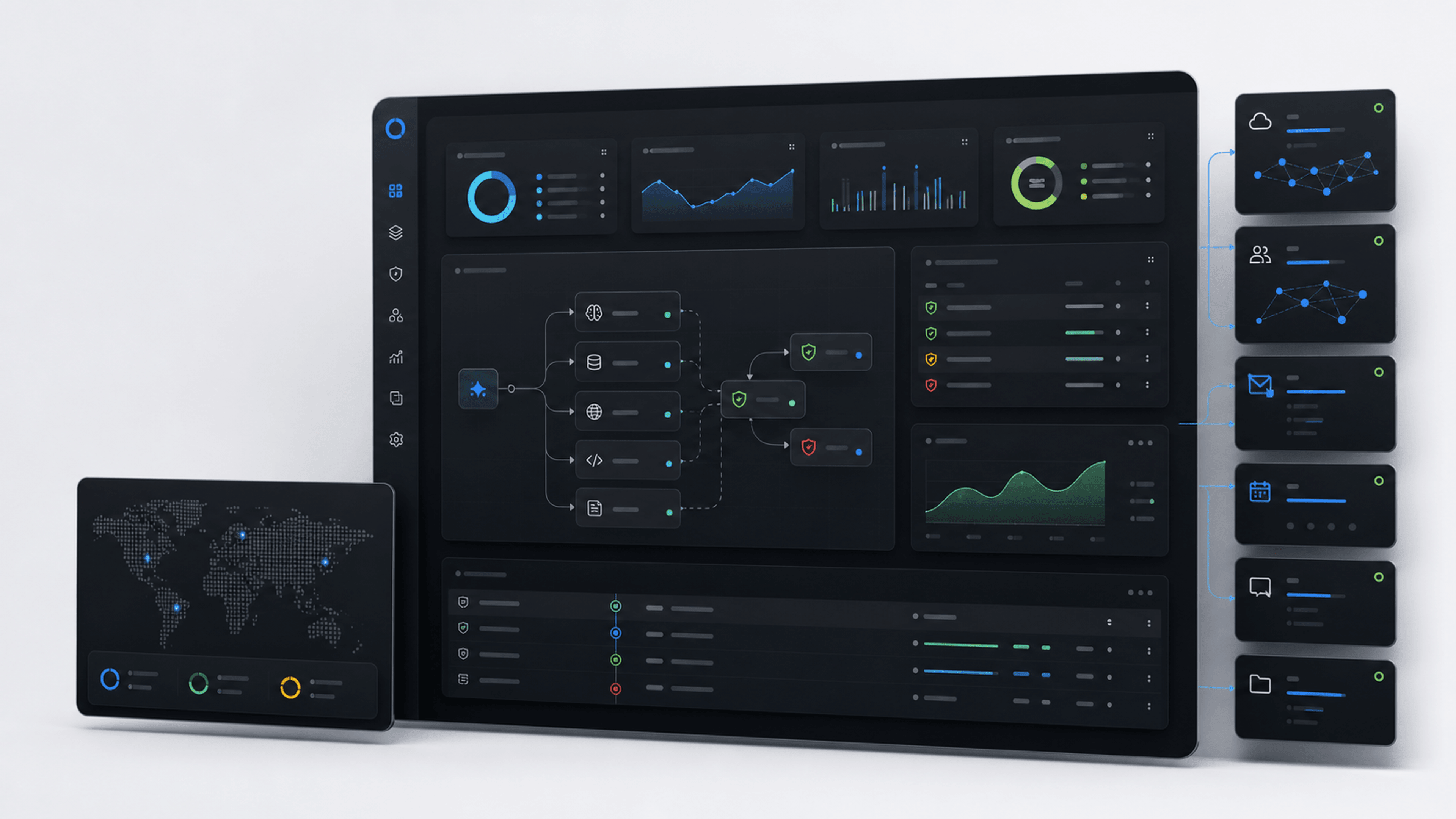
A product-first view of agent inventory, owner accountability, identity scope, permissions, data reach, approval paths, and evidence packages.
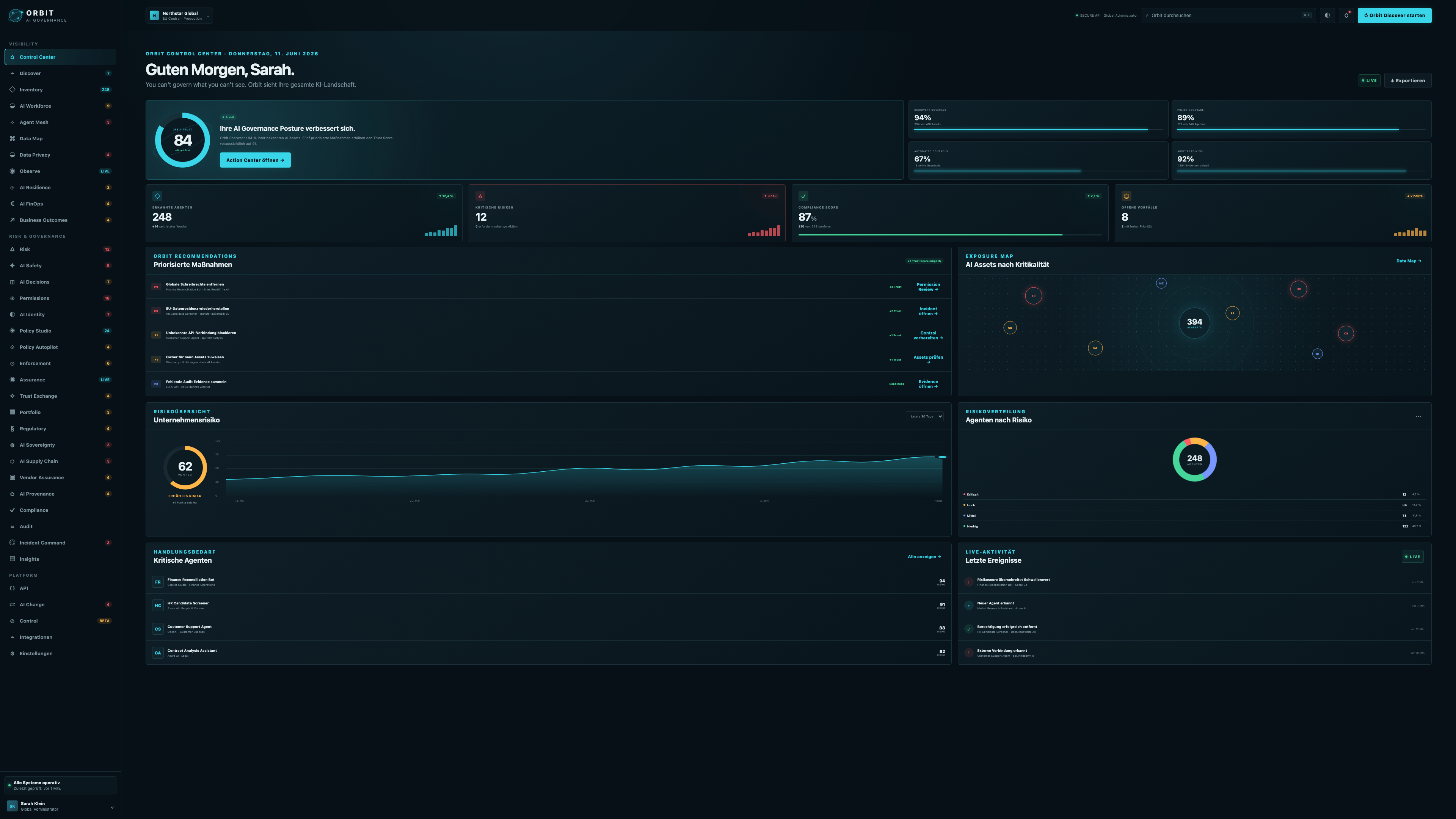
Supported agents, owners, identities, permissions, tools, workflows, and data touchpoints belong in one governed inventory.
High-impact actions should pass through policy, exception handling, and human review before they become business risk.
Approvals, exceptions, findings, and reviewer decisions should leave a defensible evidence trail.
The Point
AI agents are becoming delegated authority. Delegated authority needs governance. Orbit maps, governs, and proves that authority before it turns into unmanaged risk.
Show which agents exist, who owns them, what they can touch, and where their authority comes from.
Route sensitive actions through policy gates, exception handling, approval ownership, and escalation rules.
Turn approvals, denials, exceptions, findings, and risk changes into evidence teams can defend.
Orbit Signals
Orbit frames agent autonomy as a control surface where policy, signal, decision, and evidence can be reviewed together.
Governance workbench preview
PreviewPolicy definition
orbit.policy.tspolicy Orbit.AutonomyGate { when agent.dataSensitivity >= confidential and tool.authority includes write_back require ownerApproval within 4h preserve evidence.timeline}Evidence package
Ready for reviewDecision trace
Control checks
agent.intake
Procurement Copilot requests supplier-contract access
policy.match
Sensitive Data Gate matched against SharePoint scope
risk.score
Risk moved from 42 to 64 after data classification
decision.route
Human approval path queued for business owner
Microsoft-first Positioning
Orbit is positioned for organizations standardizing identity, data protection, security operations, and AI enablement around the Microsoft ecosystem.
Designed for Microsoft-first enterprises with existing identity, security, and compliance programs.
Control concepts aligned with Entra, Purview, Defender, Microsoft Graph, and Copilot Studio environments.
Built for governance teams that need shared evidence across AI, security, compliance, and operations.
Microsoft control plane
Tenant-aware · Evidence-first · No credential exposure in the browser
Entra ID
Identity, ownership, app roles
MappedMicrosoft Graph
Permissions, directory, activity
ScopedPurview
Sensitivity, policy, evidence
ClassifiedMicrosoft Defender
Incidents, alerts, exposure
ObservedCopilot Studio
Agents, topics, actions
GovernedTeams & SharePoint
Teams, sites, files, collaboration
BoundedSignal route
Connected signal sources
API-first Control Layer
Orbit should not become another isolated dashboard. The control layer exposes structured inventory, policy decisions, risk changes, and evidence so existing security, GRC, ITSM, and data platforms can act on governed agent signals.
Integration posture
Control API
Where signals can flow
Inventory export
Policy evaluation
Evidence package
Event delivery
SIEM
GRC
ITSM
Data layer
Evidence payload
Event preview{ "agent": "finance-reconciliation-agent", "action": "erp.write_back", "risk_score": 88, "decision": "requires_exception_review", "evidence": ["owner", "policy", "scope", "timeline"]}Trust Center
Enterprise AI governance has to survive security review, architecture review, compliance questions, and executive scrutiny. Orbit presents trust as part of the product surface, not a PDF sent later.
Control posture
Readiness: Prepared for enterprise diligence
Governance data is modeled around tenant scope, ownership, role boundaries, and least-privilege access.
Sensitive provider credentials and tokens should stay out of browser-facing workflows and review surfaces.
Policy decisions, approvals, exceptions, and findings are preserved as reviewable evidence trails.
Security, compliance, and platform teams get the facts needed for vendor, risk, and architecture review.
Review packet
Use Cases
Security, AI platform, compliance, and audit teams buy governance for different reasons. Orbit gives each team a concrete path from visibility to control and proof.
Accountable team
CISO / Security Architecture
Trigger
A new agent requests sensitive data access or elevated tool authority.
Outcome
Risk, identity, data scope, owner, policy decision, and evidence are visible before approval.
Governed path
Operating signal
4 factsEnterprise Proof
Enterprise buyers need to see how Orbit connects product signals to architecture, decisions, evidence, and operating controls that security, compliance, and platform teams can trust.
Governance path
Control architecture
Signals Orbit correlates
Owner, role, tenant, privilege
Sensitivity, source, scope, retention
Connector, action, approval, blast radius
Activity, anomaly, escalation, drift
Evidence packages
Security posture
Roadmap
The beta rollout is intentionally narrow: map the agent landscape, define control criteria, connect evidence, and give leadership a decision-ready view.
Operating model
Map
Inventory agents, connectors, owners, critical workflows, and Microsoft environment posture.
Control
Introduce policy gates, role-based review, exception handling, and operating thresholds.
Operate
Monitor risk signals, incidents, audit events, and executive readiness from one control layer.
Beta Rollout Blueprint
Board-level proof
Workstream 1
Map agents, copilots, service principals, automations, connectors, owners, and initial Microsoft posture.
Workstream 2
Define scoring thresholds, sensitive systems, approval paths, exception handling, and review ownership.
Workstream 3
Connect activity, policy decisions, alerts, and audit history into an evidence-first operating surface.
Workstream 4
Package posture, unresolved risk, ownership gaps, and next controls into a decision-ready briefing.
Product roadmap
The beta starts narrow, but the product roadmap is explicit: prove the inventory, add governance, connect operational signals, then introduce control.
Now
Microsoft-first discovery, agent inventory, owner mapping, permission mapping, basic risk scoring, and evidence package prototype.
Next
Policy Studio, approval workflows, Teams and email alerts, audit reports, API/webhooks, and admin roles.
Later
Policy evaluation concepts, SIEM/GRC/ITSM integrations, drift detection, optional enforcement, and multi-platform signals beyond Microsoft.
Private Beta
The strongest first step is a focused Orbit Assessment: establish what exists, where authority sits, which controls are missing, and what evidence leadership needs before autonomy scales.
Best-fit teams
Private Beta Assessment
The beta should start with a narrow operating question, not a generic demo. In the first conversation, we qualify the environment, the governance owner, and the proof package worth building first.
Scope the agent landscape
Identify the Microsoft systems, agent types, owners, workflows, and first governance questions that should be assessed.
Map control and evidence gaps
Review where authority, permissions, human approval, operational visibility, and audit-supporting evidence already exist or are missing.
Define the beta path
Turn the assessment into a focused pilot plan with stakeholders, success criteria, and the first proof package.
What the assessment should produce